Spiderman 3 PC Game Free Download

Spider-Man 3 is an action game loosely based on the Spider-Man 3 film and released for the Xbox 360, PlayStation 3, PlayStation 2, Wii, PlayStation Portable, Nintendo DS, Microsoft Windows and Game Boy Advance. The Xbox 360 and PS3 versions were developed by Treyarch, the PC version by Beenox while the other versions were developed by Vicarious Visions. The game's plot expands on the film by including additional characters and elements from the Spider-Man comics and the Marvel Universe. Depending on the platform,..

Read More

Please leave a comment If you found BROKEN LINK OK, thanks for visit my website,...!!!

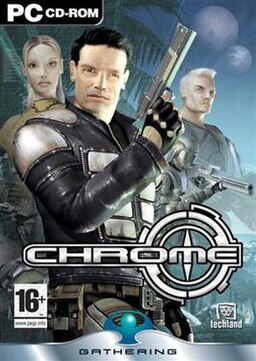
Shooter Game Chrome PC Free Download Shooter Game Angels Fall First: Planetstorm PC Download Harvest Moon - Back To Nature PC Game Download Download PC Game TMNT 2 : Battle Nexus RIP MediaFire Prince Of Persia Warrior Within Download PC Game Resident Evil 2 img 1 metal slug super vehicle Devil May Cry 3 Portable Cool Game Download

Search


Tampilkan postingan dengan label Programing. Tampilkan semua postingan

Pascal Language

Pascal is an influential imperative and procedural programming language, designed in 1968/9 and published in 1970 by Niklaus Wirth as a small and efficient language intended to encourage good programming practices using structured programming and data structuring. A derivative known as Object Pascal was designed for object-oriented programming. Pascal was developed by Niklaus Wirth and based on the ALGOL programming language, named in honor of the French mathematician and philosopher Blaise Pascal.

Prior to his work on Pascal, Wirth had developed Euler and ALGOL W and later went on to develop the Pascal-like languages Modula-2 and Oberon. Initially, Pascal was largely, but not exclusively, intended to teach students structured programming. A generation of students used Pascal as an introductory language in undergraduate courses. Variants of Pascal have also frequently been used for everything from research projects to PC games and embedded systems. Newer Pascal compilers exist which are widely used.

Pascal was the primary high-level language used for development in the Apple Lisa, and in the early years of the Mac. Parts of the original Macintosh operating system were hand-translated into Motorola 68000 assembly language from the Pascal sources. The popular typesetting system TeX by Donald E. Knuth was written in WEB, the original literate programming system, based on DEC PDP-10 Pascal, while an application like Total Commander was written in Delphi (Object Pascal).

Object Pascal is still widely used for developing Windows applications such as Skype.

Index from wikipedia

What is PHP


PHP:  Hypertext Preprocessor (a recursive acronym, originally personal home page) is a general-purpose scripting language that was originally designed for web development to produce dynamic web pages. For this purpose, PHP code is embedded into the HTML source document and interpreted by a web server with a PHP processor module, which generates the web page document. As a general-purpose programming language, PHP code is processed by an interpreter application in command-line mode performing desired operating system operations and producing program output on its standard output channel. It may also function as a graphical application. PHP is available as a processor for most modern web servers and as a standalone interpreter on most operating systems and computing platforms.

PHP was originally created by Rasmus Lerdorf in 1995 and has been in continuous development ever since. The main implementation of PHP is now produced by the PHP Group and serves as the de facto standard for PHP as there is no formal specification. PHP is free software released under the PHP License.

PHP originally stood for personal home page. Its development began in 1994 when the Danish/Greenlandic programmer Rasmus Lerdorf initially created a set of Perl scripts he called 'Personal Home Page Tools' to maintain his personal homepage, including tasks such as displaying his résumé and recording how much traffic his page was receiving.

He rewrote these scripts as C programming language Common Gateway Interface (CGI) binaries, extending them to add the ability to work with web forms and to communicate with databases and called this implementation 'Personal Home Page/Forms Interpreter' or PHP/FI. PHP/FI could be used to build simple, dynamic web applications. Lerdorf released PHP/FI as 'Personal Home Page Tools (PHP Tools) version 1.0' publicly on June 8, 1995, to accelerate bug location and improve the code. This release already had the basic functionality that PHP has today. This included Perl-like variables, form handling, and the ability to embed HTML. The syntax was similar to Perl but was more limited and simpler, although less consistent. A development team began to form and, after months of work and beta testing, officially released PHP/FI 2 in November 1997.

Zeev Suraski and Andi Gutmans, two Israeli developers at the Technion IIT, rewrote the parser in 1997 and formed the base of PHP 3, changing the language's name to the recursive initialism PHP: Hypertext Preprocessor. Afterwards, public testing of PHP 3 began, and the official launch came in June 1998. Suraski and Gutmans then started a new rewrite of PHP's core, producing the Zend Engine in 1999. They also founded Zend Technologies in Ramat Gan, Israel.

On May 22, 2000, PHP 4, powered by the Zend Engine 1.0, was released. As of August 2008 this branch is up to version 4.4.9. PHP 4 is no longer under development nor will any security updates be released.

On July 13, 2004, PHP 5 was released, powered by the new Zend Engine II. PHP 5 included new features such as improved support for object-oriented programming, the PHP Data Objects (PDO) extension (which defines a lightweight and consistent interface for accessing databases), and numerous performance enhancements. In 2008 PHP 5 became the only stable version under development. Late static binding had been missing from PHP and was added in version 5.3.

A new major version has been under development alongside PHP 5 for several years. This version was originally planned to be released as PHP 6 as a result of its significant changes, which included plans for full Unicode support. However, Unicode support took developers much longer to implement than originally thought, and the decision was made in March 2010 to move the project to a branch, with features still under development moved to trunk.

Changes in the new code include the removal of register_globals, magic quotes, and safe mode. The reason for the removals was that register_globals had given way to security holes, and the use of magic quotes had an unpredictable nature, and was best avoided. Instead, to escape characters, magic quotes may be replaced with the addslashes() function, or more appropriately an escape mechanism specific to the database vendor itself like mysql_real_escape_string() for MySQL. Functions that will be removed in future versions and have been deprecated in PHP 5.3 will produce a warning if used.

Many high-profile open-source projects ceased to support PHP 4 in new code as of February 5, 2008, because of the GoPHP5 initiative, provided by a consortium of PHP developers promoting the transition from PHP 4 to PHP 5.

PHP currently does not have native support for Unicode or multibyte strings; Unicode support is under development for a future version of PHP and will allow strings as well as class, method, and function names to contain non-ASCII characters.

PHP interpreters are available on both 32-bit and 64-bit operating systems, but on Microsoft Windows the only official distribution is a 32-bit implementation, requiring Windows 32-bit compatibility mode while using Internet Information Services (IIS) on a 64-bit Windows platform. As of PHP 5.3.0, experimental 64-bit versions are available for MS Windows.

Index from wikipedia

C Language

The root of the C language is the BCPL language, developed by Richard Martin in 1967. These languages provide ideas to Ken Thompson who later developed a language called B in 1970. Further development of B language is the C language by Dennis Ricthie around in the 1970s at Bell Telephone Laboratories Inc. (now the AT & T Bell Laboratories).
The popularity of the C language makes language versions of this lot made for a microcomputer. To create versions of the standard, ANSI (American National Standards Institute) and then set the ANSI standard for C language This ANSI standard is based on the extended standard UNIX. ANSI standard set of 32 pieces of words (keywords) standard. To 32 key words are:

Auto, break, case, char, const, continue, default, do, double, else, enum, extern, float, for, goto, if, int, long, register, return, short, signed, sizeof, static, struct, switch, typedef, union, unsigned, void, volatile, while

Why Using the C Language :
  1. C language is available almost in all types of computer
  2. C language code is the portable nature
  3. C language provides only a few key words
  4. C program executable process language faster
  5. Support the library a lot, Reliability of the C language is achieved by the library functions.
  6. C is a structured language, C has a good structure so it is easy to understand. C has functions as part of the program.
  7. In addition to high-level language, C is also considered a mid-level language. Language C could combine high-level language ability levels with low-level language level.
  8. Language C is a compiler, because its nature is a C compiler, it will generate an executable program that is required by many commercial programs.
C is an imperative (procedural) systems implementation language. It was designed to be compiled using a relatively straightforward compiler, to provide low-level access to memory, to provide language constructs that map efficiently to machine instructions, and to require minimal run-time support. C was therefore useful for many applications that had formerly been coded in assembly language.

Despite its low-level capabilities, the language was designed to encourage cross-platform programming. A standards-compliant and portably written C program can be compiled for a very wide variety of computer platforms and operating systems with few changes to its source code. The language has become available on a very wide range of platforms, from embedded microcontrollers to supercomputers.

C's design is tied to its intended use as a portable systems implementation language. It provides simple, direct access to any addressable object (for example, memory-mapped device control registers), and its source-code expressions can be translated in a straightforward manner to primitive machine operations in the executable code. Some early C compilers were comfortably implemented (as a few distinct passes communicating via intermediate files) on PDP-11 processors having only 16 address bits. Target platforms for C programs range from 8-bit microcontrollers to supercomputers.
Index from wikipedia

Programing Languages

Programming language, or often termed also with computer language, is the technique of command / instruction standards to govern the computer. This programming language is a set of rules of syntax and semantics used to define computer programs. This language allows a programmer to specify exactly which data to be processed by the computer, how this data will be stored / transmitted, and precisely what kind of steps to be taken in various situations.

Types of Programming Languages
A.   Object-Oriented Language (Object Oriented Language)
Is a programming language that is able to utilize the objects that are available or make a specific object by using a programming language.
The advantage of this programming language are:
1.    Able to reflect the needs of users as lakyaknya that is in the real world.
2.    Relatively more flexible and easily adaptable to changes in a program.
3.    Has a feature that strengthens and improves the flexibility of an object such as encapsulation, inheritance, and polymorphism.
The drawback of this programming language are:
1.    Not allow implementation of a strong on reuse
2.    Property software is not tied in a single functional unit, so it must be crosscut between components.
3.    Crosscut resulted in the development and maintenance difficult.
Examples of object-oriented language is Java, PHP, C + + and others.

B.    High Level Language (High Level Language)
Is a programming language that uses grammatical rules in writing a statement and can be understood directly.
The advantage of this high-level languages are: (for Delphi)
1.    Is freeware.
2.    Is a development of the Pascal language, so very familiar if the user to control the Pascal language.
Lack of high-level languages are: (for Delphi)
1. If the user does not master the language Pascal will experience little difficulty.
Examples of high-level languages are Pascal, Basic, Delphi and others.

C.    Language Intermediate Level (Middle Level Language)
Is a programming language that uses grammatical rules in writing a statement, it is easy to understand and have certain instructions that can be directly accessed by the computer.
The advantages of high-level languages are: (for C language)
1.    C language is available in most computers.
2.    Execute a more rapid process.
3.    Only provide fewer keywords.
The downside of this intermediate-level language are: (For Language C)
1.    Number of Operators and the flexibility of writing programs sometimes confuse users.
Examples of these intermediate-level language is the language C.

D.   Low Level Language (Low Level Language)
Is a programming language-oriented machine. Language is included to the first and second generation is considered a low-level language, or low level language, said low level, because the relationship is very close to the engine.
The advantage of this low-level languages are:
1.    Having a high speed
2.    Very stable.
3.    Having a large number of file system.
Lack of low-level language is:
1.    Very difficult to learn.
Examples of low-level language is assembly language.